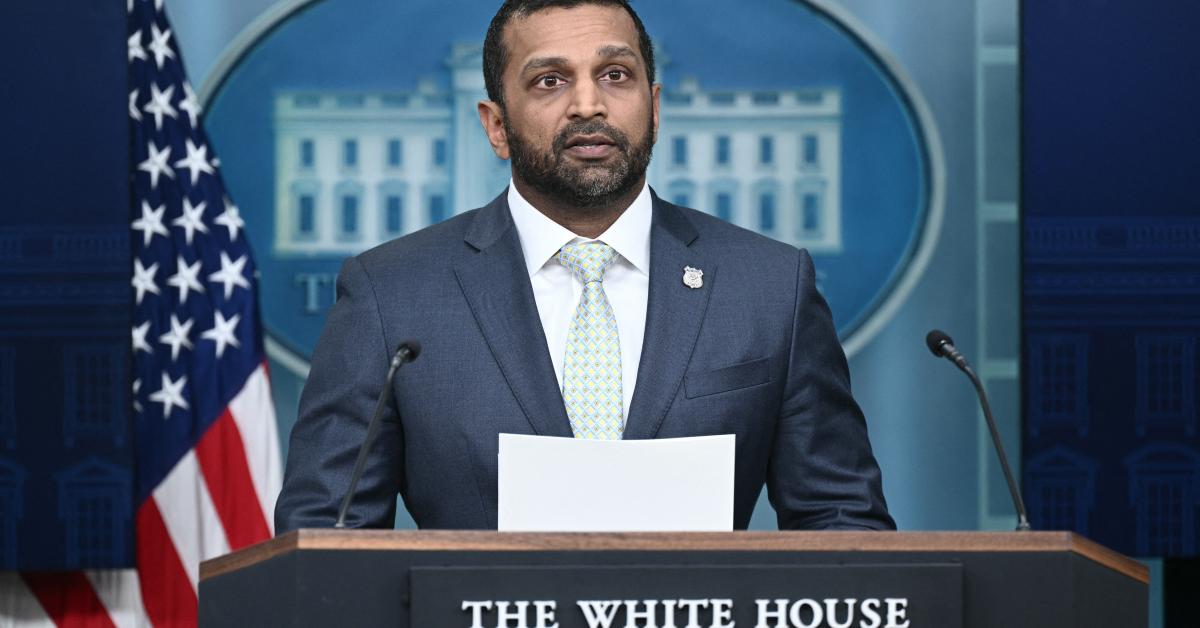
The Kash Patel Email Breach: What Happened?
The digital world received a stark reminder of its inherent vulnerabilities when news broke of a significant cyberattack targeting former FBI Director Kash Patel's personal email account. An Iran-linked hacking collective, operating under the name Handala Hack Team, claimed responsibility for the breach, subsequently disseminating what they purported to be Patel's private information online. This incident, while specifically focused on a high-profile individual, casts a broad shadow over the cybersecurity practices of officials and the broader public, highlighting the critical risks associated with personal digital footprints.
According to confirmations from the FBI, the Handala Hack Team successfully accessed Kash Patel's emails, sharing elements like his alleged resume and personal photographs on their website. The images circulated on social media, complete with the group's watermark, depicted Patel in various casual settings—posing with a vintage car, near a jet, smoking cigars, and taking a selfie with a bottle of liquor. While the BBC noted it could not independently verify all leaked documents, sources familiar with the incident have confirmed the authenticity of some images. The FBI's swift acknowledgment underscored the seriousness of the breach, even as they clarified that the compromised information was "historical in nature and involves no government information." This distinction is crucial, though it does little to diminish the personal intrusion and the strategic implications for national security figures. The agency has since offered a substantial reward of up to $10 million for information leading to the identification of Handala group members, signaling the severity with which the U.S. government views such state-sponsored cyber intrusions.
The precise timeline of the breach remains somewhat complex. Reports initially surfaced in 2024 about Iranian-backed hackers breaching Patel's private communications weeks before his appointment to lead the FBI. Cybersecurity experts, including Cynthia Kaiser of the Halcyon Ransomware Research Center, suggested that the content released by Handala might stem from an older compromise. "The emails look very old... this is likely a compromise that occurred from other groups in another time period, and is recycled today," Kaiser noted, indicating a potential long-term vulnerability or a fragmented attack campaign. Regardless of the exact timing or origin, the public release of Kash Patel's emails serves as a powerful demonstration of hostile actors' capabilities and their intent to exploit any perceived weakness. You can read more about the specifics of the compromise in
FBI Director Kash Patel's Emails Breached by Iran-Linked Hackers.
Targeting the Personal: Why High-Profile Officials are Vulnerable
The Handala Hack Team boldly declared that the "so-called 'impenetrable' systems of the FBI were brought to their knees within hours." However, this statement misrepresents the nature of the breach. The attack targeted Kash Patel's personal email account, not the secure, government-level systems of the FBI. This distinction is critical to understanding the underlying vulnerability. As cybersecurity experts frequently point out, personal accounts inherently lack the robust, multi-layered protections, advanced threat detection, and continuous monitoring typically deployed on government networks.
Dave Schroeder, Director of National Security Initiatives at the University of Wisconsin–Madison, succinctly articulated this point: "Personal accounts don't have the same level of protection and alerting as government systems, so these are often an attractive target for hackers." For groups like Handala, which are reportedly linked to Iran's Ministry of Intelligence and Security (MOIS), targeting high-profile individuals' personal accounts is a calculated move. It’s not necessarily about demonstrating sophisticated hacking prowess against government firewalls, but rather about achieving strategic objectives through less complex means. These objectives include:
- Propaganda and Psychological Operations: Claiming hacks of prominent individuals allows groups like Handala to sow discord, erode public trust, and project an image of power and defiance.
- Disinformation Campaigns: Leaked personal data can be manipulated or taken out of context to spread false narratives and influence public opinion.
- Reputational Damage: Exposing personal information, even if mundane, can be embarrassing and damaging to an official's public image, creating distractions and undermining credibility.
- Information Gathering: While the FBI stated no government information was compromised, personal emails can still contain valuable intelligence on an individual's contacts, habits, travel, or even vulnerabilities that could be exploited later for more targeted attacks or blackmail.
Handala's consistent efforts to gain this type of access align with their broader agenda. The U.S. Justice Department recently seized several Handala domain names, asserting that the group was used by Iran's MOIS to spread "terrorist propaganda," conduct "attempted psychological operations targeting adversaries of the regime," claim credit for cyber activity, and even call for the killing of journalists. This context reveals that the breach of
Kash Patel's emails by the Handala Hack Team was not an isolated incident but part of a larger, aggressive state-sponsored strategy aimed at destabilization and intimidation.
Beyond Kash Patel: Broader Ramifications for Public Figures
The incident involving Kash Patel's emails serves as a crucial case study, illustrating a systemic vulnerability that extends far beyond one individual. For high-profile officials, politicians, business leaders, and public figures across various sectors, the line between personal and professional life is increasingly blurred in the digital age. A breach of a personal email account, even if it contains no classified government data, carries significant risks and broader ramifications.
One primary concern is the potential for
reputational damage. The release of personal photos or private correspondence, regardless of its content, can create public scrutiny, embarrassment, and provide ammunition for adversaries seeking to discredit or distract. For individuals in positions of trust, any perceived lapse in judgment or exposure of private moments can erode public confidence and complicate their ability to perform their duties effectively.
Furthermore, leaked personal information can open doors to more sophisticated attacks. While the "historical" nature of Patel's data might mitigate immediate operational threats, such information can be invaluable for social engineering campaigns. Adversaries can use details gleaned from personal emails to craft highly convincing phishing attempts against the individual's colleagues, family, or professional contacts, potentially leading to breaches of more secure systems. This creates a cascade effect, where one personal vulnerability can become an entry point into a broader network.
The psychological impact on victims is also significant. The knowledge that intimate details of one's life are circulating publicly can be profoundly distressing. For nation-states like Iran, the goal isn't always direct data theft but also to create a climate of fear, distrust, and insecurity among adversaries, effectively using cyberattacks as a tool for psychological warfare. This makes every high-profile individual a potential target, not just for the information they hold, but for the symbolic impact of their compromise.
Fortifying Your Digital Defenses: Essential Cybersecurity Practices
The Kash Patel email hack underscores the urgent need for robust personal cybersecurity practices, especially for individuals in sensitive positions. While no system is entirely impervious, adopting proactive measures can significantly reduce the risk of becoming a victim. Here are actionable tips for fortifying your digital defenses:
- Embrace Two-Factor Authentication (2FA/MFA): This is arguably the single most effective defense against unauthorized access. Even if your password is compromised, 2FA (which requires a second form of verification, like a code from your phone or a hardware key) can prevent a breach. Enable it on *every* account that offers it—email, social media, banking, and cloud services.
- Practice Strong, Unique Passwords: Avoid using easily guessable passwords or reusing the same password across multiple accounts. Utilize a reputable password manager to generate and store complex, unique passwords for each service. Think of passphrases rather than single words.
- Be Vigilant Against Phishing and Social Engineering: Attackers often don't "hack" systems; they trick people. Be suspicious of unsolicited emails, texts, or calls, especially those asking for personal information, login credentials, or promising urgent action. Always verify the sender's identity before clicking links or downloading attachments. Check for subtle misspellings in URLs or email addresses.
- Regularly Update Software and Devices: Keep your operating systems, applications, and anti-virus software updated. These updates often include critical security patches that fix known vulnerabilities that hackers exploit.
- Limit Your Digital Footprint: Be mindful of the personal information you share online, especially on social media. Every piece of information, from your pet's name to your favorite vacation spot, can be used by attackers to craft personalized attacks or guess security questions.
- Separate Work and Personal Accounts: For officials and professionals, consider maintaining entirely separate email accounts and devices for work-related communications versus personal use. This creates a stronger barrier, ensuring that a breach of one doesn't immediately compromise the other.
- Review Privacy Settings: Periodically audit the privacy settings on all your online accounts (social media, email, cloud storage) to ensure you are not inadvertently sharing more information than necessary.
- Be Wary of Public Wi-Fi: Unsecured public Wi-Fi networks can be vulnerable to eavesdropping. Use a Virtual Private Network (VPN) when connecting to public networks to encrypt your traffic.
- Backup Important Data: While it won't prevent a hack, regular backups ensure that you don't lose critical information in the event of a ransomware attack or data corruption.
Conclusion
The breach of Kash Patel's personal emails by the Iran-linked Handala Hack Team serves as a potent and alarming reminder of the relentless and evolving cyber threats faced by individuals, particularly those in prominent public positions. This incident vividly illustrates that even without compromising government systems, the exposure of personal digital information can have far-reaching consequences, including reputational damage, psychological distress, and potential avenues for future, more sophisticated attacks. While the FBI clarified that no classified government data was affected, the hack underscored the critical distinction between personal and professional cybersecurity defenses and highlighted how less protected personal accounts become attractive targets for state-sponsored adversaries intent on propaganda and psychological operations. For anyone navigating the digital landscape, but especially for public figures, the incident is a clear call to action: personal cybersecurity is not a luxury, but an absolute necessity. Adopting strong authentication, unique passwords, vigilance against phishing, and a mindful approach to online information sharing are no longer optional best practices but essential safeguards against a persistent and resourceful threat landscape.